According to Charles Dowding, it’s No Dig Day today. Well, he would say that, wouldn’t he?
As you might have realised, we take soil building very seriously here at the Fife Seed Library, and one of the best things you can do for healthy soil is to leave it the f alone. The top few inches are packed with a complex ecosystem of microorganisms, busily decomposing things and shuttling minerals around. Many of them are gainfully employed by the roots of your plants, which can attract bacteria to them to help make the nutrients they’re short of. Really!
So imagine this carefully interconnected micro-city, routes and relationships built over time and adaptive to local conditions. Left alone, the ecosystem in the soil becomes stable and self-regulating, the cycle of growth and decomposition putting back in as much as it took out.
Then imagine a colossal spade slicing in from above, shaking it up, and flipping it all upside down.
Hyphae are severed, enzymes displaced, nematode travel schedules severely disrupted. Chaos! Back to the drawing board.
It’s all well and good when you’re Charles Dowding, with your giant, well-established market garden and compost site the size of a small village. What if you’re two people who took on a community allotment full of mine slag, glass, plastic bottles, thousand-year-old dock and horsetail last March? (That was us.)
I’m afraid, reader, we had to dig.
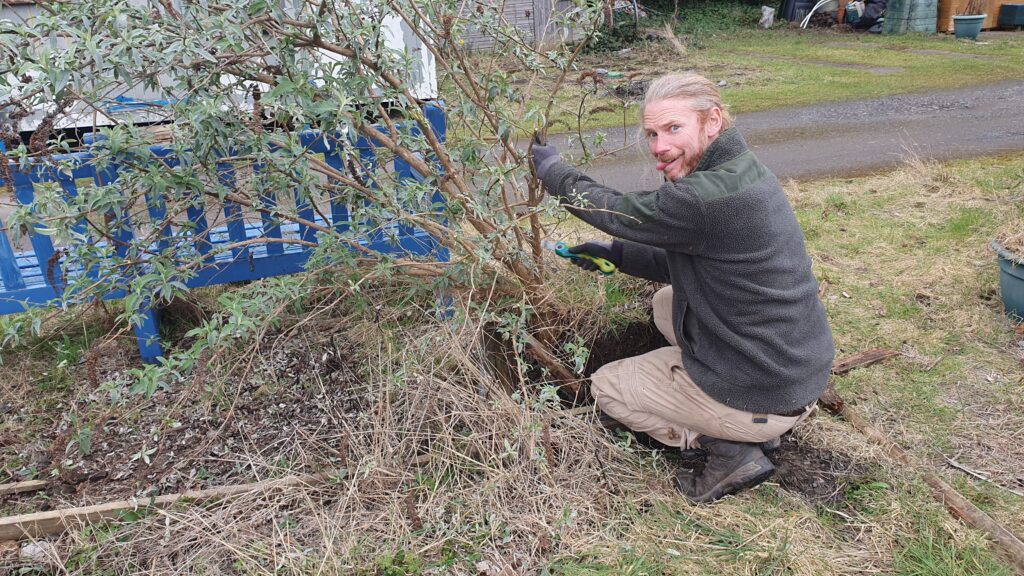
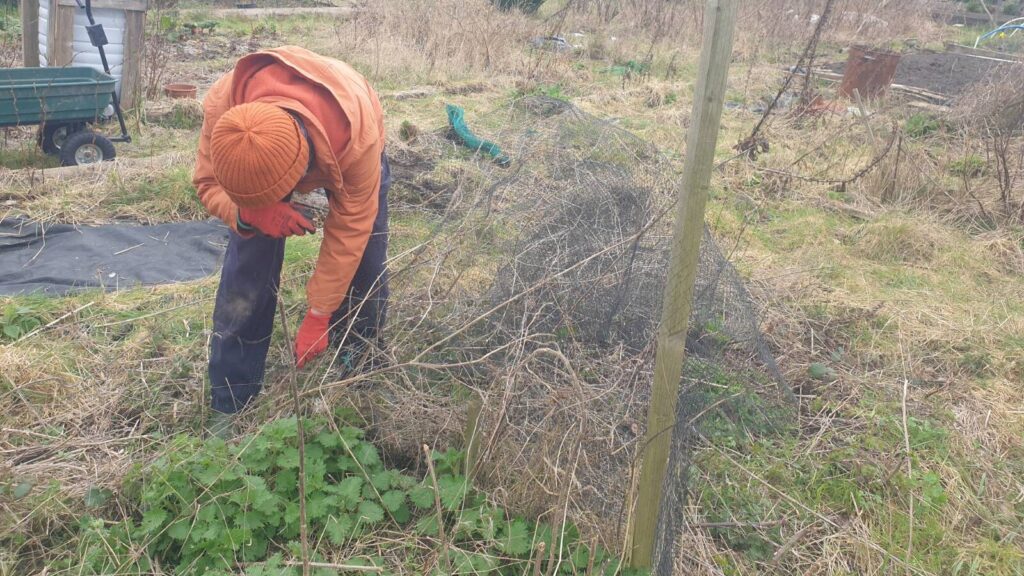
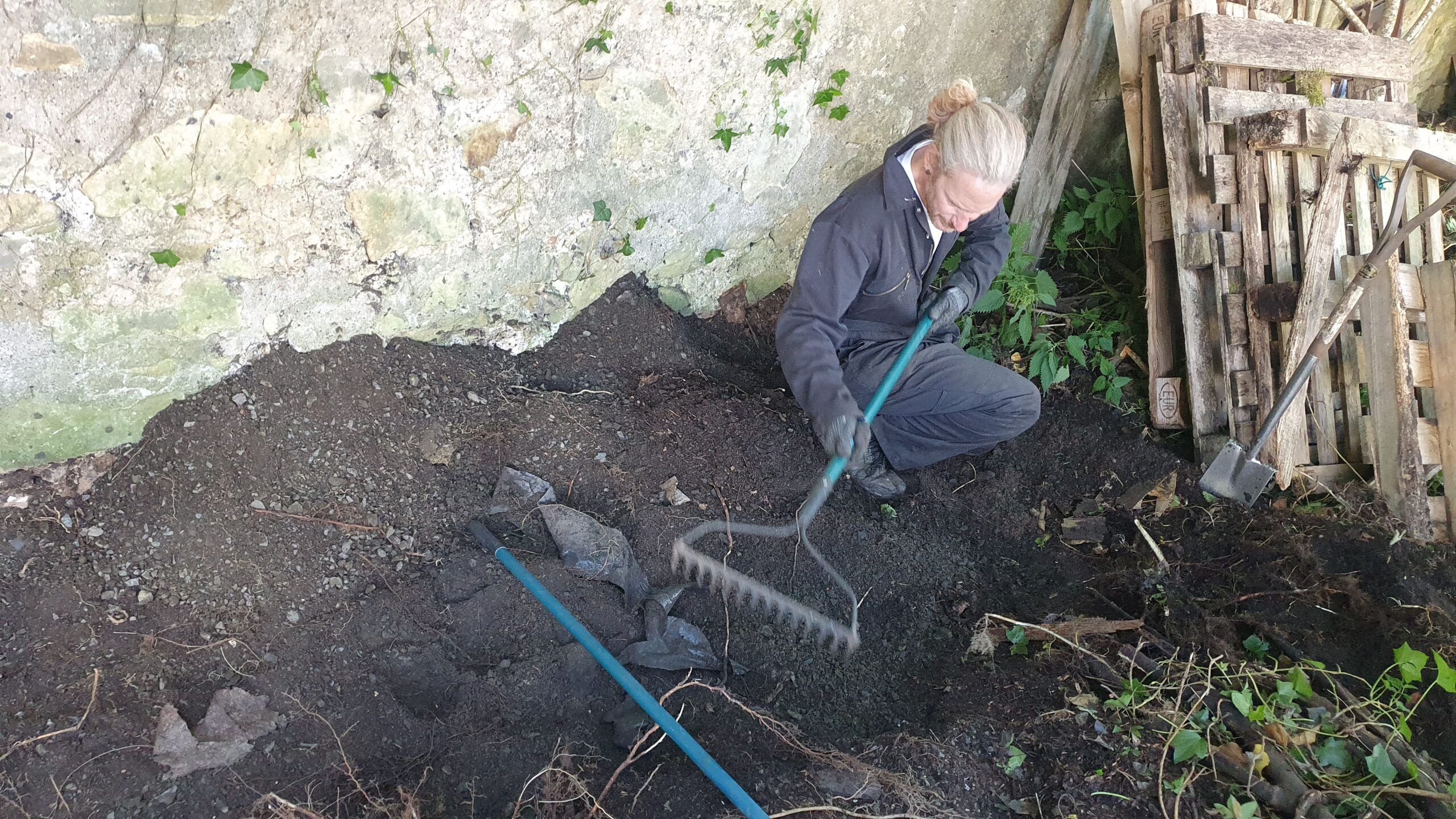
We dug out rocks and deeply rooted weeds and endless shreds of brittle plastic netting. We extracted a well-established buddleja. We lifted mylar and plastic, and dug soil underneath that was so compacted surely nothing in there could breathe. At one point we hit concrete, and had to stop. And my god, did we dig out horsetail roots, following them to the core of the planet to extract them without leaving a shred behind. (There’s a whole other blog post, probably a workshop, on the horsetail. But suffice to say for now: it loves mylar and plastic, and it loves compacted earth.)
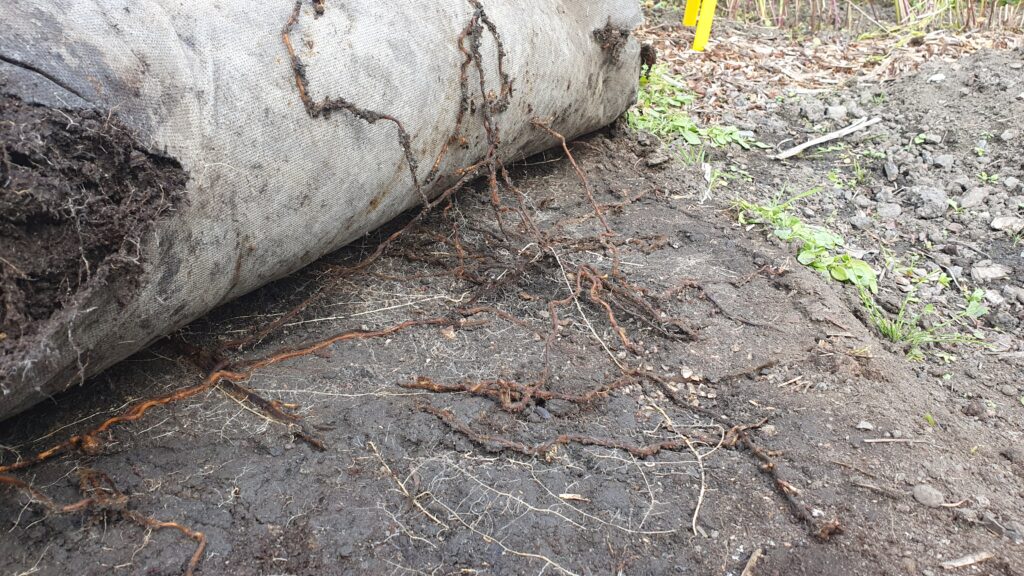
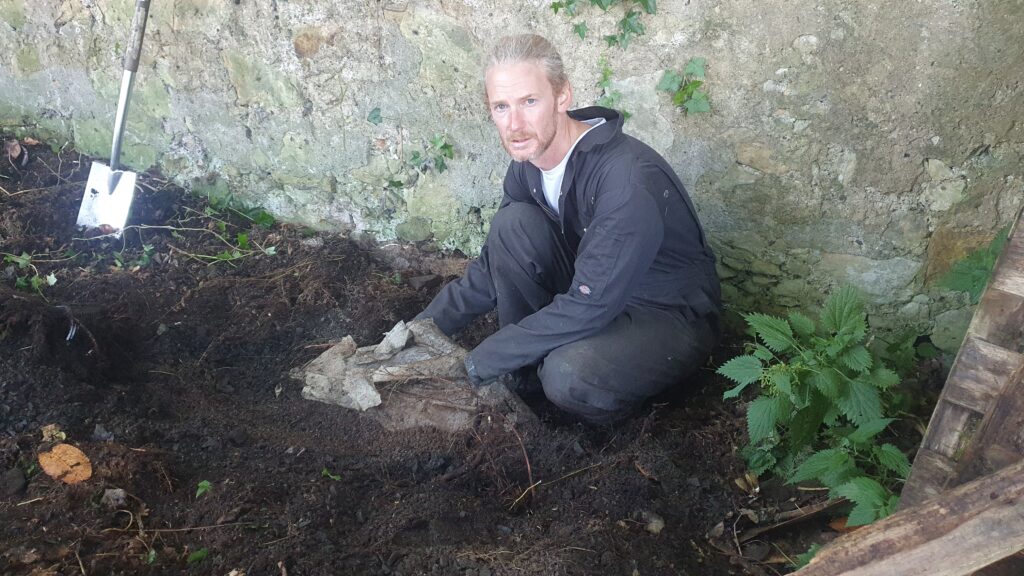
There wasn’t much in the way of worms on our plot when we started. We got excited when we found the odd centipede. That soil was pretty desolate. It was a ghost town. (The ghosts were horsetail.)
But that was then and this is now! We dug, we composted, we fertilised, and we grew loads of crops. Now our beds are wriggling and happy. Now, we can stop digging.
Okay, we did dig up our potatoes, and took the opportunity to do a thorough going-over for horsetail roots again, as that plot was the most invaded. We extracted loads of the roots, planted some winter greens, and so far the horsetail has not popped back up. Take that.
But apart from that, we’re doing a few things to severely limit the amount of soil disturbance we do from now on.
We’re cutting off, rather than pulling up, annuals that have finished (squash, legumes), and weeds that are not deeply rooted.
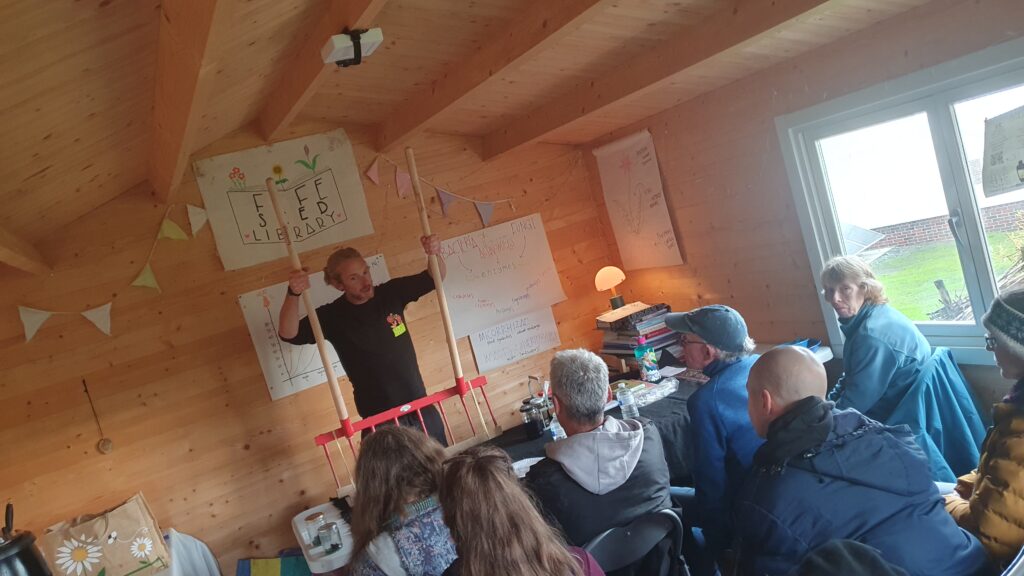
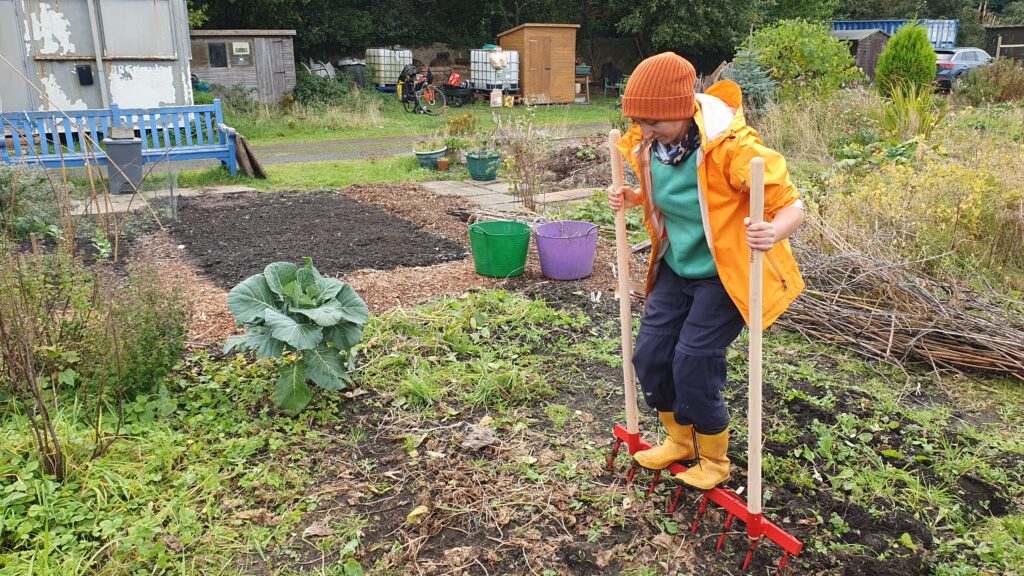
We got a broadfork, and used it to aerate – not turn over – the soil in our most compacted plots. This is many-pronged device is much less work than digging, and far less disruptive to the soil ecosystem. I understand, though we’re not there yet, that as our soil continues to improve, won’t even need to do that.
We top dressed a whole bed with four-month decomposed compost from one of our bays. And we top dressed half of another bed with seaweed, and half with manure.
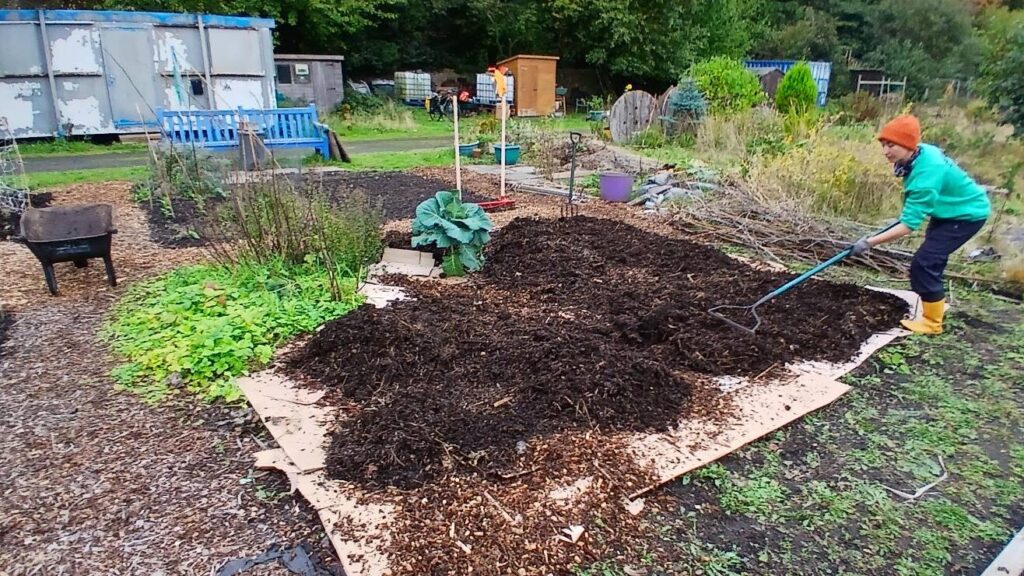
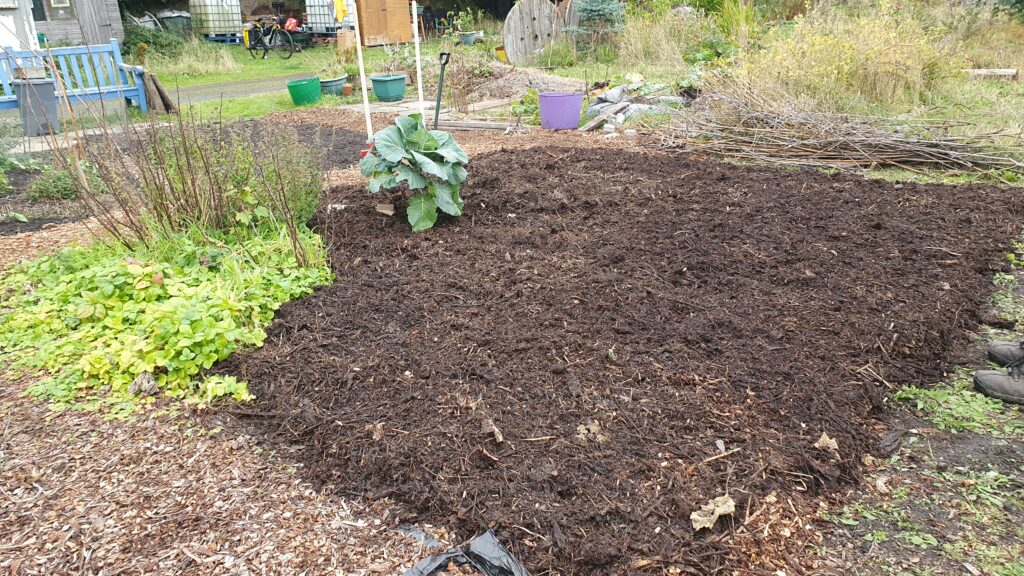
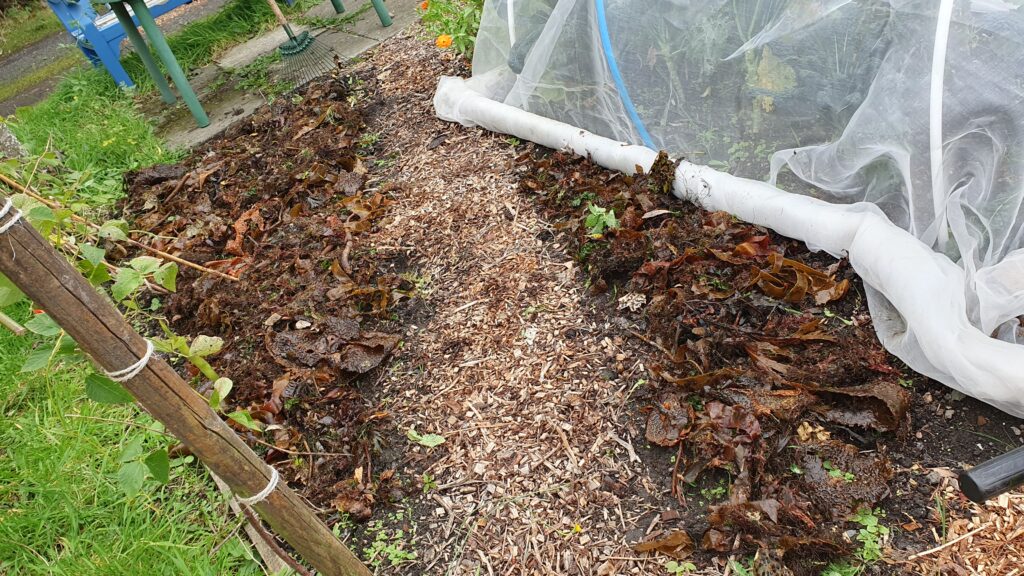
We’re planting winter crops like broad beans, purslane and chard, left our self-seeded rocket alone, kept two kale crops in, and are thinking about green manure. Because bare soil is the worst.
It feels right! Think about whether your garden or plot is in a state that doesn’t really need digging, and if so, try leaving the microorganisms alone for a year. Let us know how you get on!
Leave a Reply